Is Cornstarch Gluten Free? Complete Allergen Guide
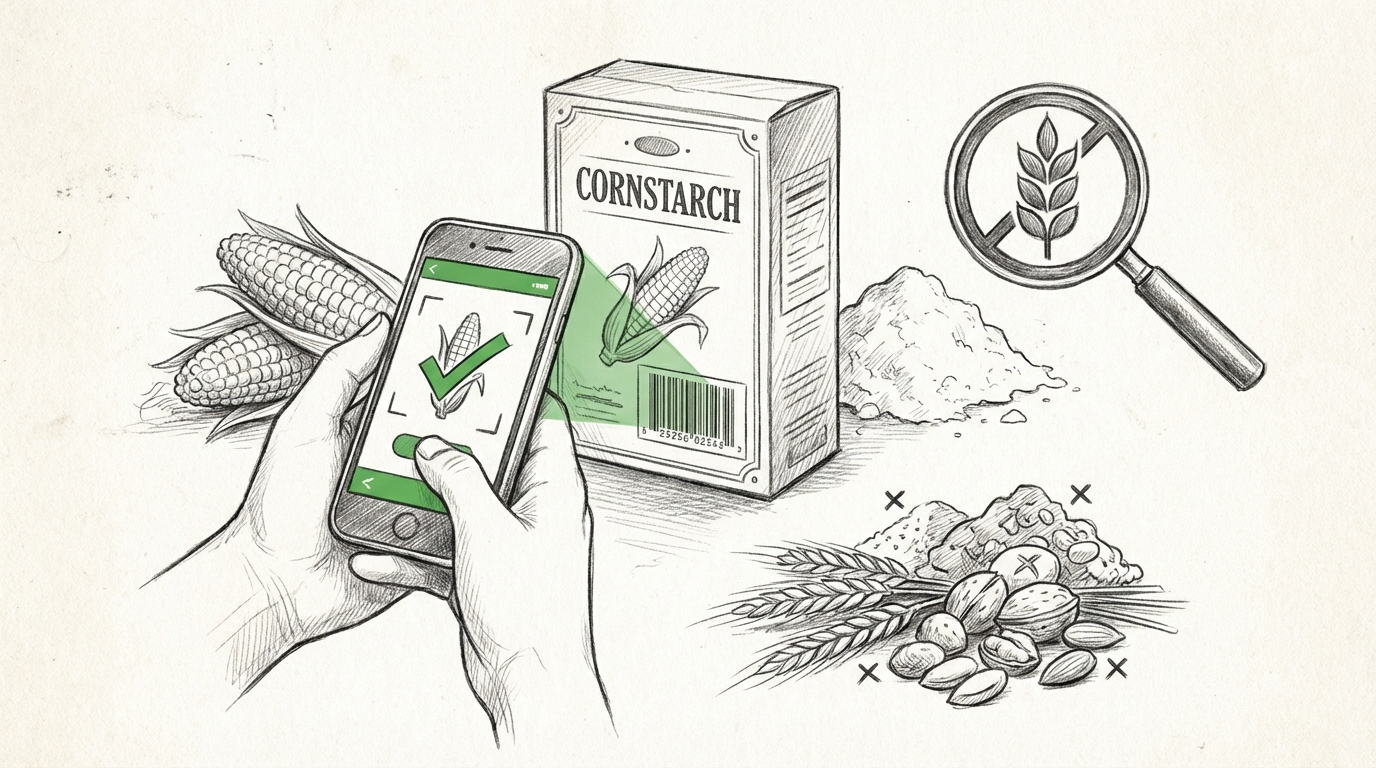
TL;DR: Yes, cornstarch is naturally gluten free as it's made from corn, not wheat, barley, or rye. However, cross-contamination can occur during manufacturing. Always check product labels or use allergen detection apps to scan barcodes and verify that your cornstarch is certified gluten free and safe for celiac disease or gluten sensitivities.
If you're navigating a gluten-free lifestyle due to celiac disease, gluten sensitivity, or personal preference, understanding which ingredients are safe is crucial. One common question that frequently arises is: is cornstarch gluten free? The short answer is yes—pure cornstarch is naturally gluten-free. However, there are important considerations about cross-contamination and product labeling that every gluten-conscious consumer should understand.
Cornstarch is a refined carbohydrate derived entirely from corn kernels, making it naturally free from wheat, barley, and rye—the grains that contain gluten. This versatile ingredient appears in countless products, from baked goods to sauces, and serves as a valuable thickening agent for those avoiding gluten.
In this comprehensive guide, we'll explore everything you need to know about cornstarch and gluten, including manufacturing processes, cross-contamination risks, and how to safely incorporate cornstarch into your gluten-free diet.
Frequently Asked Questions
Is cornstarch gluten free?
Yes, cornstarch is naturally gluten free. Made from the endosperm of corn kernels, it contains no wheat, barley, or rye proteins. Pure cornstarch is safe for people with celiac disease and gluten sensitivities. However, always check labels for potential cross-contamination warnings if the product was processed in facilities that also handle gluten-containing grains.
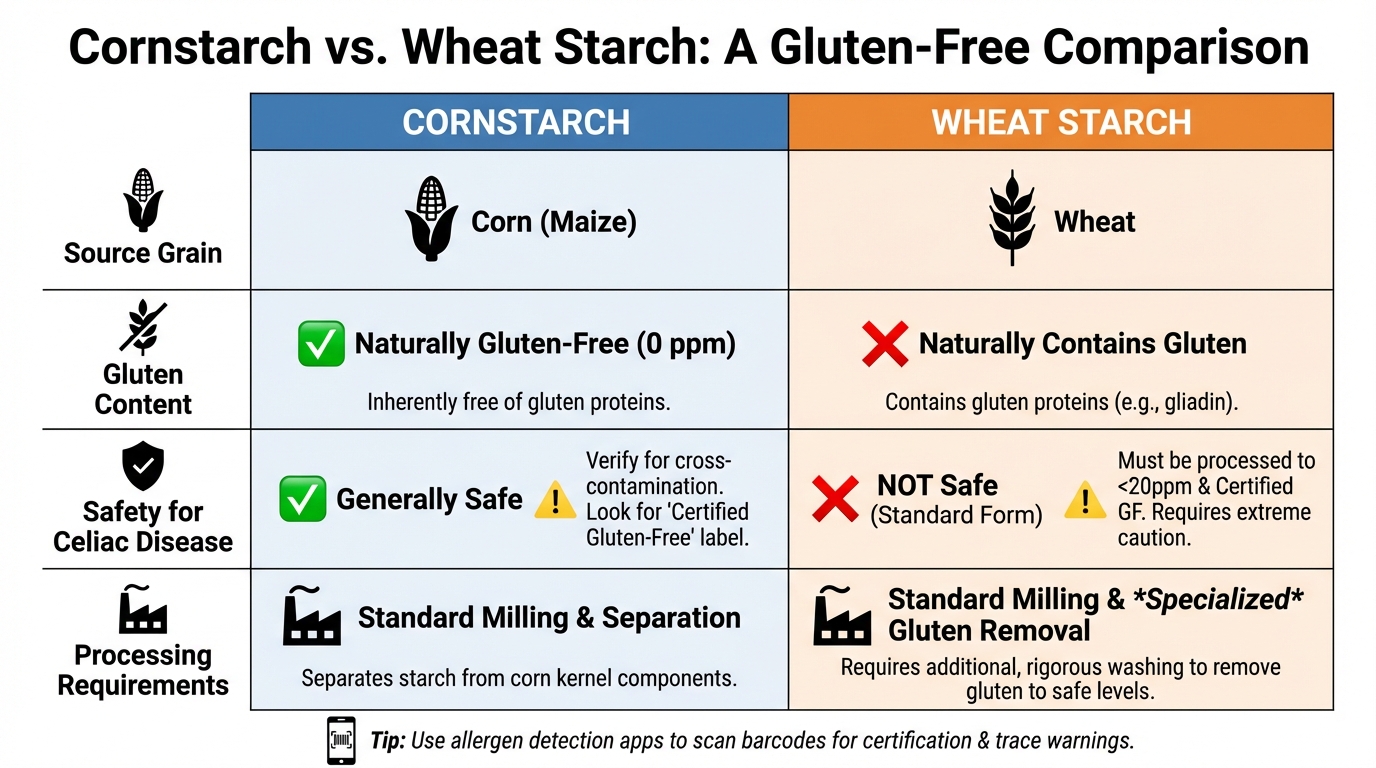
What is the difference between cornstarch and wheat starch for gluten-free diets?
Cornstarch is naturally gluten free and derived from corn, making it safe for celiac disease. Wheat starch contains gluten unless specially processed to remove gluten proteins. Even processed wheat starch may contain trace amounts, while pure cornstarch has zero gluten content. For strict gluten-free diets, cornstarch is the safer choice over wheat-based alternatives.
Can people with celiac disease safely consume products containing cornstarch?
Yes, people with celiac disease can safely consume pure cornstarch. It's a gluten-free ingredient commonly used in cooking and food manufacturing. However, individuals should verify the product label for gluten-free certification and check for cross-contamination warnings. Using an allergy checker app can help scan barcodes to confirm the product is safe and free from gluten traces.
Are there any hidden sources of gluten in cornstarch products?
Pure cornstarch itself is gluten free, but cross-contamination can occur during manufacturing if processed in facilities handling wheat products. Some cornstarch products may contain additives or be packaged on shared equipment. Always look for gluten-free certification labels and scan product barcodes with an allergy checker app to detect potential traces and cross-contamination risks.
How can I verify if cornstarch products are truly gluten free?
Check for certified gluten-free labels on packaging, which ensures products contain less than 20 ppm of gluten. Read ingredient lists for wheat-derived additives. Use an allergy checker app to scan barcodes and detect gluten, traces, and cross-contamination warnings across 13 different allergens. This technology provides instant verification for safe gluten-free shopping.
What gluten-free alternatives work like cornstarch in cooking?
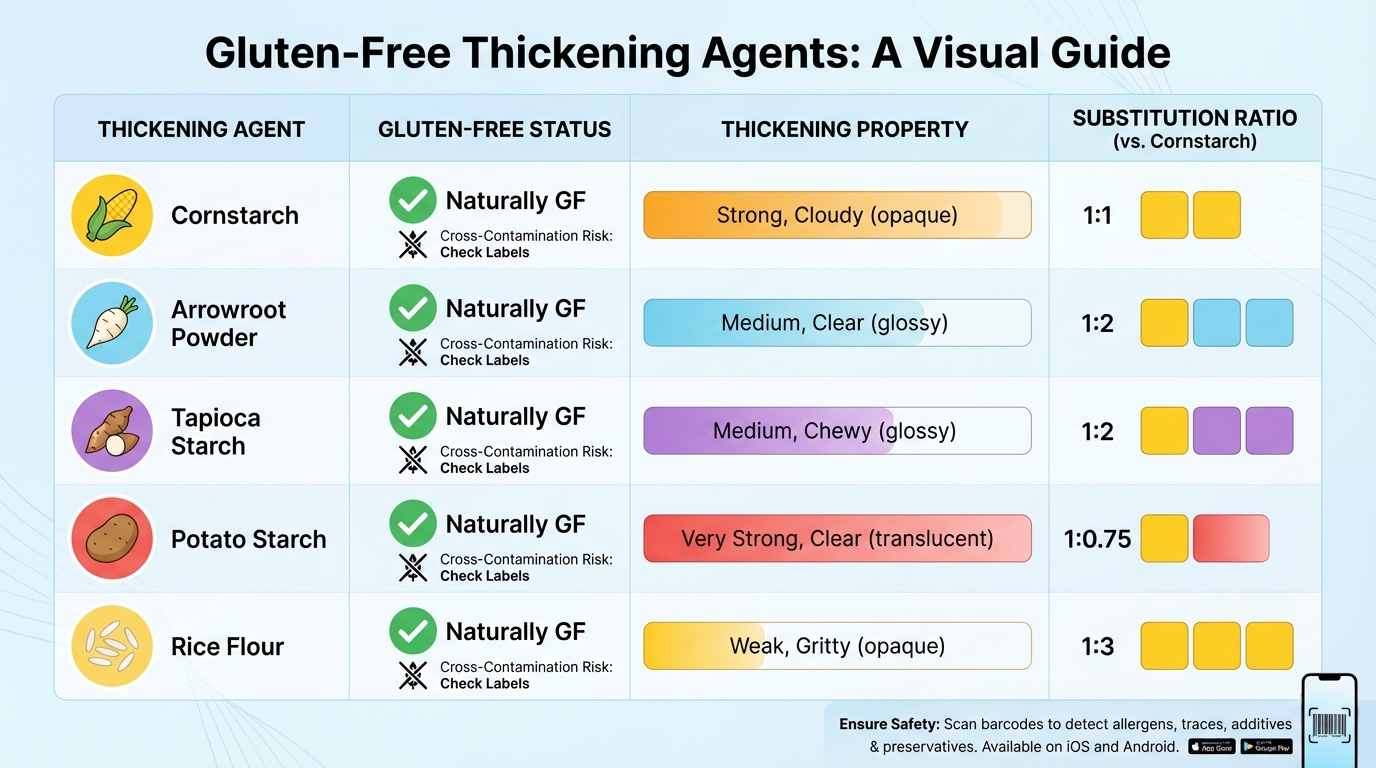
Several gluten-free alternatives to cornstarch include arrowroot powder, tapioca starch, potato starch, and rice flour. Each provides similar thickening properties for sauces, gravies, and baking. All these starches are naturally gluten free and wheat free, making them safe for celiac diets. They can typically substitute cornstarch in equal amounts, though cooking properties may vary slightly.
Does cornstarch contain any common allergens besides gluten?
Cornstarch is naturally free from gluten, dairy, eggs, nuts, and soy. However, it may contain corn allergens, which affect some individuals. Cross-contamination with other allergens can occur during processing. Using an allergy checker app available on iOS and Android helps identify all 13 major allergens, traces, additives, and preservatives in cornstarch products for comprehensive safety verification.
Are gluten-free products with cornstarch safe for wheat allergies?
Yes, cornstarch is both gluten free and wheat free, making it safe for people with wheat allergies and celiac disease. Since it's derived entirely from corn, it contains no wheat proteins. However, always verify labels for cross-contamination warnings, especially if you have severe wheat allergies. Scanning products with an allergen detection app ensures complete safety verification.
Understanding Cornstarch: What It Is and How It's Made
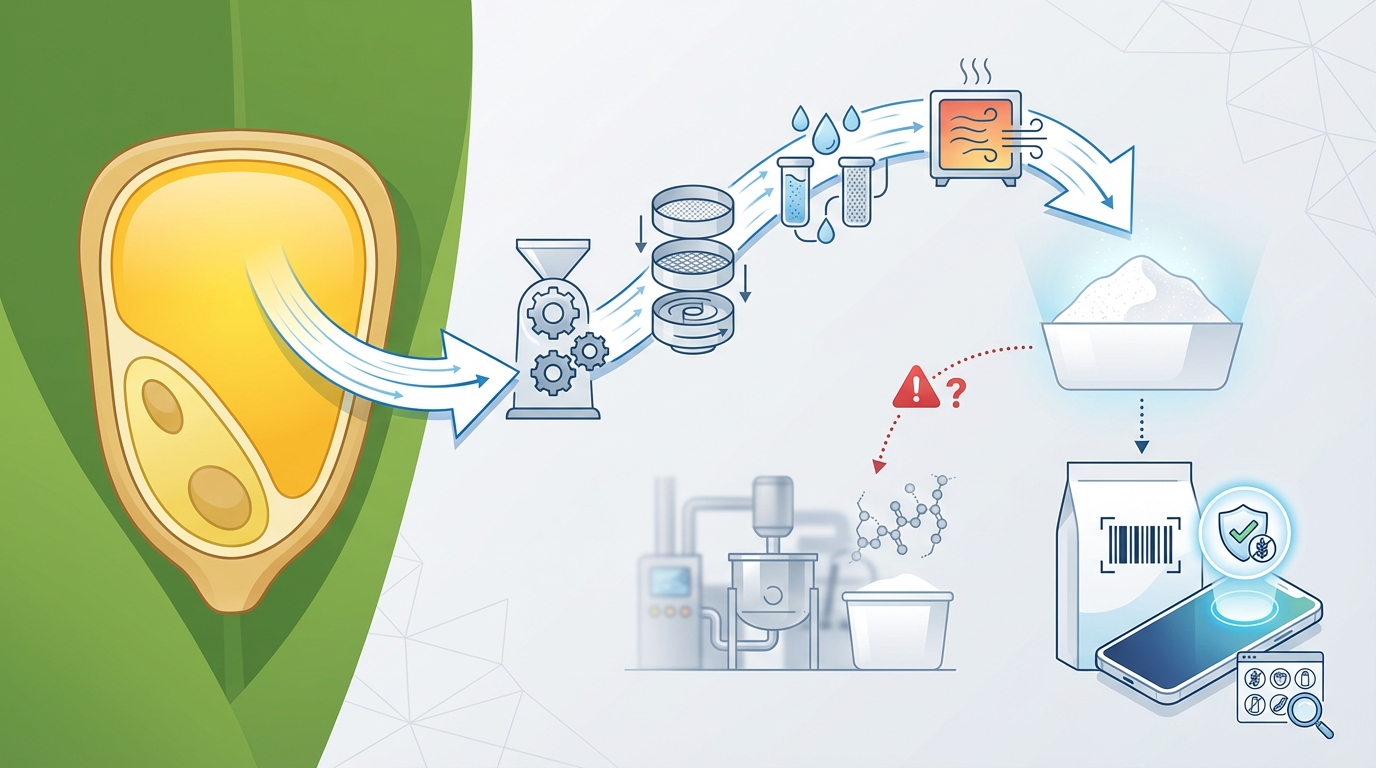
Cornstarch is a fine, powdery substance extracted from the endosperm of corn kernels. The manufacturing process involves several steps that isolate the starch from other corn components like protein, fiber, and oil.
The Cornstarch Production Process
The creation of cornstarch follows a systematic approach:
- Cleaning and steeping: Corn kernels are cleaned and soaked in water mixed with sulfur dioxide to soften them
- Germ separation: The corn germ is removed through a process called degermination
- Grinding: The remaining kernel components are ground to release the starch
- Separation: The starch is separated from fiber and protein using centrifugal force
- Washing and drying: The starch is washed, refined, and dried into the familiar white powder
This entire process uses only corn, making the final product inherently gluten-free. Unlike wheat starch, which requires special processing to remove gluten proteins, cornstarch contains no gluten from the start.
Is Cornstarch Gluten Free? The Scientific Answer
From a scientific standpoint, cornstarch is completely gluten-free. Gluten is a protein composite found specifically in wheat, barley, rye, and their derivatives. Corn belongs to an entirely different botanical family and contains no gluten proteins whatsoever.
Why Cornstarch Is Safe for Celiac Disease
For individuals with celiac disease, consuming gluten triggers an immune response that damages the small intestine. Pure cornstarch poses no such risk because it lacks the specific proteins—gliadin in wheat, hordein in barley, and secalin in rye—that cause this reaction.
The Celiac Disease Foundation and similar organizations recognize cornstarch as a safe ingredient for gluten-free diets. However, they emphasize the importance of choosing products that are certified gluten-free to avoid cross-contamination issues.
| Starch Type | Naturally Gluten-Free | Safe for Celiac Disease |
|---|---|---|
| Cornstarch | Yes | Yes (if pure/certified) |
| Potato Starch | Yes | Yes |
| Tapioca Starch | Yes | Yes |
| Wheat Starch | No | Only if specially processed |
| Arrowroot Starch | Yes | Yes |
Cross-Contamination Risks: The Hidden Danger
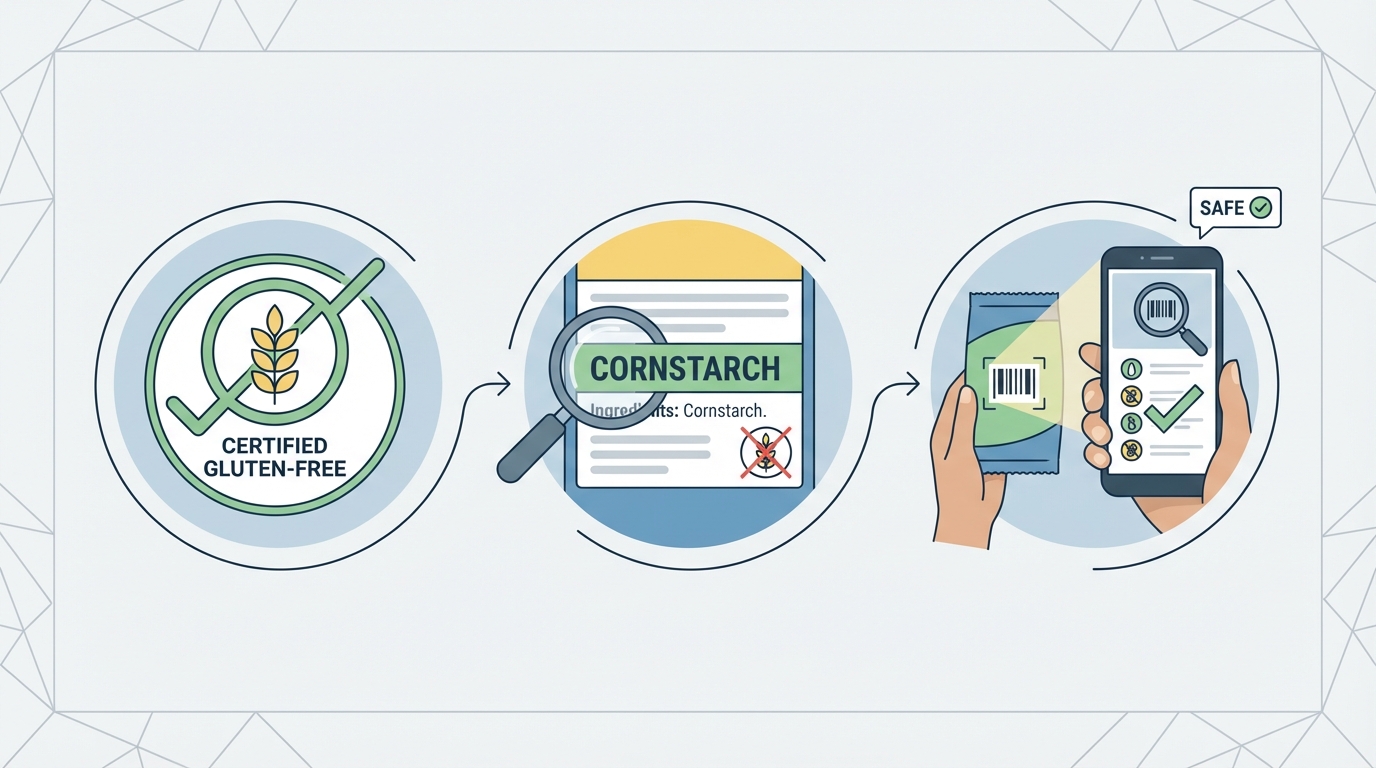
While cornstarch itself contains no gluten, cross-contamination during manufacturing, packaging, or storage can introduce gluten into otherwise safe products. This is the primary concern for people with celiac disease or severe gluten sensitivities.
How Cross-Contamination Occurs
Cross-contamination can happen at multiple points in the supply chain:
- Shared facilities: Manufacturers may process both corn and wheat products in the same facility
- Shared equipment: Production lines might handle multiple grain types without thorough cleaning between runs
- Storage and transport: Cornstarch may be stored near wheat flour or transported in containers previously used for gluten-containing products
- Packaging lines: Even if the product is pure, packaging equipment might introduce contamination
For individuals managing severe gluten sensitivities, using an allergy checker app can help verify product safety by scanning barcodes and identifying potential allergen risks before purchase.
Reading Labels for Hidden Gluten
When purchasing cornstarch, careful label reading is essential. Look for these indicators of safety:
- Certified Gluten-Free label: Products with this certification have been tested to contain less than 20 parts per million (ppm) of gluten
- "Processed in a dedicated facility" statement: Indicates no gluten-containing products are manufactured in the same location
- Allergen statements: Check for warnings like "may contain wheat" or "processed in a facility that also processes wheat"
- Brand reputation: Some manufacturers specialize in gluten-free products and maintain stricter protocols
Cornstarch vs. Other Gluten-Free Thickeners
While cornstarch is a popular gluten-free thickening agent, several alternatives exist for those seeking variety or managing multiple food sensitivities. Understanding the differences helps you make informed choices based on your specific dietary needs.
Comparing Gluten-Free Thickening Agents
| Thickener | Thickening Power | Best Uses | Considerations |
|---|---|---|---|
| Cornstarch | Medium | Sauces, gravies, puddings | Can become cloudy; breaks down with prolonged heat |
| Arrowroot Powder | High | Fruit sauces, glazes | More expensive; creates clear, glossy finish |
| Tapioca Starch | High | Pies, baking | Creates chewy texture; freezes well |
| Potato Starch | Very High | Soups, stews | Can become gummy if overused |
| Rice Flour | Low | Roux, baking | Requires more product; grainy texture possible |
Each thickener has unique properties that make it suitable for specific applications. Cornstarch remains popular due to its neutral flavor, widespread availability, and moderate cost.
Using Cornstarch in Gluten-Free Cooking and Baking
Cornstarch serves multiple purposes in gluten-free kitchens beyond simple thickening. Understanding how to use it effectively can improve your gluten-free cooking results significantly.
Cornstarch as a Thickening Agent
When using cornstarch to thicken liquids, proper technique ensures smooth, lump-free results:
- Always create a slurry by mixing cornstarch with cold liquid before adding to hot mixtures
- Use approximately 1 tablespoon of cornstarch per cup of liquid for medium thickness
- Add the slurry gradually while stirring constantly
- Bring the mixture to a boil briefly to activate the thickening properties
- Avoid prolonged boiling, which can break down the starch and thin the sauce
Cornstarch in Gluten-Free Baking
In gluten-free baking, cornstarch plays several important roles:
- Texture improvement: Adds lightness and tenderness to baked goods
- Moisture retention: Helps prevent dryness common in gluten-free products
- Crumb structure: Creates a finer, more delicate crumb
- Flour blend component: Often combined with rice flour, almond flour, or other gluten-free flours
Many gluten-free recipes use cornstarch as 20-30% of the total flour blend. This proportion provides structure without the heaviness that can result from using only nut flours or whole grain gluten-free flours.
Common Products Containing Cornstarch
Cornstarch appears in numerous food products, both as a primary ingredient and as an additive. Being aware of where cornstarch commonly appears helps you make informed purchasing decisions.
Food Products with Cornstarch
You'll frequently find cornstarch in these categories:
- Processed foods: Soups, sauces, gravies, and instant puddings
- Baked goods: Cakes, cookies, and pastries (especially gluten-free varieties)
- Confections: Powdered sugar (anti-caking agent), candies, and frosting
- Dairy products: Some yogurts and shredded cheese (prevents clumping)
- Frozen foods: Ice cream, frozen dinners, and breaded items
When checking products like gluten free cheese-its or other snack foods, cornstarch often appears on the ingredient list as a binding or coating agent.
Non-Food Uses of Cornstarch
Cornstarch extends beyond the kitchen into various applications:
- Pharmaceutical tablets and capsules as a binder
- Cosmetics and personal care products for texture
- Baby powder and body powders
- Biodegradable packaging materials
While non-food uses don't directly impact dietary gluten intake, individuals with extreme sensitivities should be aware of potential skin contact or accidental ingestion from these products.
Modified Cornstarch: What You Need to Know
Modified cornstarch is regular cornstarch that has been chemically or physically altered to change its properties. This modification improves stability, texture, or performance in specific applications.
Is Modified Cornstarch Gluten-Free?
Yes, modified cornstarch remains gluten-free as long as it's derived from corn. The modification process doesn't introduce gluten. However, the term "modified food starch" without specifying the source can be problematic.
In the United States, if a product label lists "modified food starch" without identifying the source, it's typically derived from corn. However, if wheat is used, manufacturers must declare it as "modified wheat starch" due to FDA allergen labeling laws.
Common Modifications and Their Uses
| Modification Type | Purpose | Common Applications |
|---|---|---|
| Acid-modified | Reduced viscosity | Gummy candies, adhesives |
| Cross-linked | Improved stability | Canned soups, frozen foods |
| Pre-gelatinized | Instant thickening | Instant puddings, dry mixes |
| Oxidized | Lower temperature gelling | Batters, coatings |
Some modified starches involve chemical treatments with substances like hydroxy stearic acid or poly carboxylic acid to alter their molecular structure. These modifications don't affect gluten-free status but may be concerns for those avoiding certain food additives.
Identifying Safe Cornstarch Products
Selecting truly gluten-free cornstarch requires attention to certification, manufacturing practices, and brand reliability. Here's how to ensure the products you choose are safe.
Certification and Testing Standards
Several organizations certify gluten-free products through rigorous testing:
- GFCO (Gluten-Free Certification Organization): Requires products to contain less than 10 ppm of gluten
- NSF International: Tests to the FDA standard of less than 20 ppm
- CSA (Celiac Support Association): Certifies products meeting strict gluten-free standards
- FDA Gluten-Free Label: Products labeled "gluten-free" must meet the FDA's less than 20 ppm requirement
Using a food allergy app can simplify the verification process by instantly checking products against databases of certified gluten-free items and flagging potential concerns.
Trusted Gluten-Free Cornstarch Brands
Several manufacturers have established reputations for producing safe, certified gluten-free cornstarch:
- Bob's Red Mill: Clearly labeled gluten-free cornstarch produced in dedicated facilities
- Argo: Widely available brand that tests for gluten contamination
- Clabber Girl: Offers certified gluten-free cornstarch options
- Rumford: Provides gluten-free cornstarch with clear labeling
Always verify current certification status, as manufacturing practices can change. When in doubt, contact the manufacturer directly to inquire about their gluten-free protocols.
Cornstarch and Other Dietary Restrictions
Beyond gluten concerns, individuals often manage multiple dietary restrictions simultaneously. Understanding how cornstarch fits into various dietary frameworks helps with comprehensive meal planning.
Cornstarch in Special Diets
Cornstarch's compatibility with different dietary approaches:
- Vegan/Vegetarian: Completely plant-based and suitable for all plant-based diets
- Dairy-free: Contains no milk proteins or lactose; safe for dairy allergies
- Nut-free: Derived from corn, not tree nuts or peanuts
- Kosher/Halal: Generally acceptable when properly certified
- Low-FODMAP: Considered low-FODMAP in typical serving sizes
For those seeking gluten free dairy free snacks, cornstarch-based products often meet both requirements, making them versatile options for multiple restrictions.
Nutritional Considerations
While cornstarch is gluten-free and allergen-friendly, it's important to understand its nutritional profile:
| Nutrient | Per 1 Tablespoon (8g) | Notes |
|---|---|---|
| Calories | 30 | Primarily from carbohydrates |
| Carbohydrates | 7g | High glycemic index |
| Protein | 0g | No protein content |
| Fat | 0g | Completely fat-free |
| Fiber | 0g | Refined product with no fiber |
Cornstarch is essentially pure carbohydrate with minimal nutritional value beyond energy. It should be used as a functional ingredient rather than a nutritional staple.
Alternatives to Cornstarch for Multiple Allergies
Some individuals need to avoid corn in addition to gluten due to corn allergies or sensitivities. Fortunately, several gluten-free, corn-free alternatives exist.
Corn-Free, Gluten-Free Thickeners
If you need to avoid both corn and gluten, consider these options:
- Arrowroot powder: Extracted from tropical plants; neutral flavor and clear finish
- Tapioca starch: Made from cassava root; excellent for baking and thickening
- Potato starch: Very effective thickener with high binding power
- Sweet rice flour: Also called glutinous rice flour (despite the name, it's gluten-free)
- Kuzu (kudzu) starch: Traditional Japanese thickener with health benefits
These alternatives work similarly to cornstarch but may require slight adjustments to ratios. Generally, use equal amounts for arrowroot and tapioca, but reduce potato starch by about 25% due to its stronger thickening power.
Restaurant Dining and Cornstarch
When dining out, cornstarch frequently appears in restaurant preparations, particularly in sauces, gravies, and Asian cuisine. Understanding where it's used helps you make safer choices.
Common Restaurant Uses of Cornstarch
Restaurants use cornstarch extensively for:
- Thickening sauces and gravies
- Creating crispy coatings for fried foods
- Binding meatballs and dumplings
- Stabilizing soups and stews
- Preparing stir-fry dishes (common in Chinese cuisine)
While cornstarch itself is gluten-free, cross-contamination in restaurant kitchens is common. Shared fryers, cutting boards, and cooking surfaces can introduce gluten even when individual ingredients are safe.
Questions to Ask Restaurant Staff
When dining out with gluten sensitivities, ask these important questions:
- Do you use dedicated gluten-free preparation areas?
- Are your sauces and gravies made with cornstarch or wheat flour?
- Do you have separate fryers for gluten-free items?
- Can you prepare my meal using clean utensils and cookware?
- Are your staff trained on gluten-free protocols?
For those tracking nutritional information while dining out, tools like a chipotle nutrition calculator can help you make informed choices about restaurant meals while managing dietary restrictions.
Scientific Research on Cornstarch and Celiac Disease
Multiple scientific studies have examined the safety of cornstarch for individuals with celiac disease, providing evidence-based guidance for its use in gluten-free diets.
Key Research Findings
Research consistently demonstrates that pure cornstarch poses no risk to individuals with celiac disease:
- Studies show no immune response in celiac patients consuming pure cornstarch
- Intestinal biopsy results remain normal when cornstarch is consumed as part of a gluten-free diet
- No increase in celiac disease antibodies occurs with cornstarch consumption
- Cross-contamination, not cornstarch itself, accounts for any adverse reactions
The scientific consensus supports cornstarch as a safe ingredient for gluten-free diets when sourced from reputable manufacturers who follow proper contamination prevention protocols.
Monitoring Your Individual Response
While research supports cornstarch safety, individual responses can vary. Some people report digestive issues with cornstarch due to:
- High glycemic impact affecting blood sugar
- Rapid digestion causing digestive discomfort
- Corn sensitivity unrelated to gluten
- Reaction to other ingredients in products containing cornstarch
If you experience symptoms after consuming cornstarch-containing products, consult with a healthcare provider to determine whether the issue stems from cornstarch, cross-contamination, or another ingredient.
Storage and Shelf Life of Cornstarch
Proper storage ensures your cornstarch remains safe and effective for extended periods. Understanding storage best practices also helps prevent contamination in your home kitchen.
Optimal Storage Conditions
To maintain cornstarch quality and prevent contamination:
- Store in airtight containers: Prevents moisture absorption and pest infiltration
- Keep in cool, dry locations: Avoid areas near stoves or humid environments
- Separate from gluten-containing products: Prevent cross-contamination in your pantry
- Use clean, dry utensils: Never dip wet spoons into cornstarch containers
- Check expiration dates: While cornstarch has a long shelf life, quality degrades over time
Shelf Life Expectations
Properly stored cornstarch remains viable for:
- Unopened packages: Indefinitely when stored correctly
- Opened containers: 18-24 months in airtight storage
- Signs of spoilage: Off odors, discoloration, or clumping indicate moisture exposure
Unlike flour, cornstarch doesn't typically develop rancidity, but moisture exposure can promote mold growth or cause clumping that affects performance.
Managing Multiple Food Sensitivities with Technology
For individuals managing celiac disease alongside other food allergies or sensitivities, technology offers powerful tools to simplify food selection and ensure safety.
Benefits of Allergen Scanning Apps
Modern food allergy scanner apps provide comprehensive support for managing dietary restrictions:
- Instant barcode scanning to identify allergens and additives
- Detection of 13 different allergens including gluten
- Identification of traces, additives like methane sulfonic acid, and preservatives
- Personalized allergen profiles for family members
- Database of safe products and brands
These tools prove especially valuable when shopping for processed foods where cornstarch appears alongside numerous other ingredients, helping you quickly verify product safety without reading lengthy ingredient lists.
Creating a Gluten-Free Kitchen
Beyond individual products, establishing a safe gluten-free kitchen environment requires systematic approaches:
- Dedicated storage: Separate shelves or containers for gluten-free items
- Color-coded utensils: Distinct cutting boards, toasters, and cooking tools
- Thorough cleaning protocols: Regular deep cleaning of shared surfaces
- Education: Ensuring all household members understand cross-contamination risks
- Clear labeling: Marking gluten-free products to prevent mix-ups
Cornstarch in Gluten-Free Beer and Beverages
The beverage industry increasingly uses cornstarch and corn-derived ingredients in gluten-free alternatives to traditional beer and other drinks.
Gluten-Free Beer Production
Many gluten free wheat free beer options use corn as a primary ingredient:
- Corn provides fermentable sugars without gluten
- Cornstarch contributes to body and mouthfeel
- Corn-based beers offer lighter, crisper profiles
- Combination with rice, sorghum, or millet creates complex flavors
Popular gluten-free beer brands like Omission, New Planet, and Glutenberg use corn alongside other gluten-free grains to create satisfying alternatives to traditional wheat-based beers.
Other Cornstarch-Containing Beverages
Beyond beer, cornstarch appears in various beverages:
- Protein shakes and meal replacements (as a thickener)
- Some fruit juice blends (for consistency)
- Certain coffee creamers (as a stabilizer)
- Chocolate milk and flavored milk drinks
Always verify gluten-free status on beverage labels, as cross-contamination can occur even in corn-based products manufactured in facilities handling gluten-containing ingredients.
Global Perspectives on Cornstarch and Gluten-Free Labeling
Gluten-free labeling regulations vary significantly across countries, affecting how cornstarch products are labeled and certified worldwide.
International Labeling Standards
| Region | Gluten-Free Threshold | Labeling Requirements |
|---|---|---|
| United States | Less than 20 ppm | Voluntary gluten-free labeling with FDA standards |
| European Union | Less than 20 ppm | Mandatory allergen labeling; "gluten-free" regulated |
| Canada | Less than 20 ppm | Mandatory gluten source declaration |
| Australia | No detectable gluten | Strict "gluten-free" claims; "low gluten" option available |
| United Kingdom | Less than 20 ppm | Crossed grain symbol indicates certification |
When traveling or purchasing imported products, understanding these variations helps you make informed decisions about cornstarch-containing items from different countries.
Cultural Variations in Cornstarch Use
Different cuisines use cornstarch in distinctive ways:
- Asian cuisine: Essential for velveting meat, creating crispy coatings, and thickening sauces
- Latin American cooking: Used in desserts like alfajores and some traditional preparations
- European baking: Combined with wheat flour in some regions for tender cakes (not gluten-free)
- American cooking: Common in gravies, puddings, and as a baking ingredient
Understanding these cultural applications helps you navigate international food products and restaurant menus when managing gluten-free requirements.
Conclusion: Cornstarch as a Safe Gluten-Free Staple
To answer the question definitively: yes, cornstarch is gluten-free when sourced from reputable manufacturers who follow proper contamination prevention protocols. This versatile ingredient offers tremendous value for individuals with celiac disease, gluten sensitivity, or those following gluten-free diets for other reasons.
The key to safely incorporating cornstarch into your diet lies in understanding these critical points:
- Pure cornstarch contains no gluten proteins naturally
- Cross-contamination during manufacturing poses the primary risk
- Certified gluten-free products provide the highest safety assurance
- Reading labels carefully and understanding allergen statements protects your health
- Modified cornstarch remains gluten-free when derived from corn
For those managing multiple dietary restrictions or food allergies, modern technology simplifies the process of verifying product safety. Download the Nutrict app to scan barcodes instantly and identify allergens, traces, additives, and preservatives in products before you buy. Available on both iOS and Android, Nutrict helps you shop confidently and manage your dietary needs efficiently.
Whether you're thickening a sauce, baking gluten-free treats, or simply trying to understand ingredient labels better, cornstarch remains a reliable, safe option for gluten-free cooking and baking. By choosing certified products, maintaining a contamination-free kitchen, and staying informed about manufacturing practices, you can enjoy the benefits of this versatile ingredient without compromising your health.
Take control of your food allergies and dietary restrictions today. Visit Nutrict to learn how our allergen scanning technology can transform your shopping experience and provide peace of mind with every food choice you make.
Article created using IntentRank