Polycarboxylic Acid: Uses, Safety & Allergen Facts
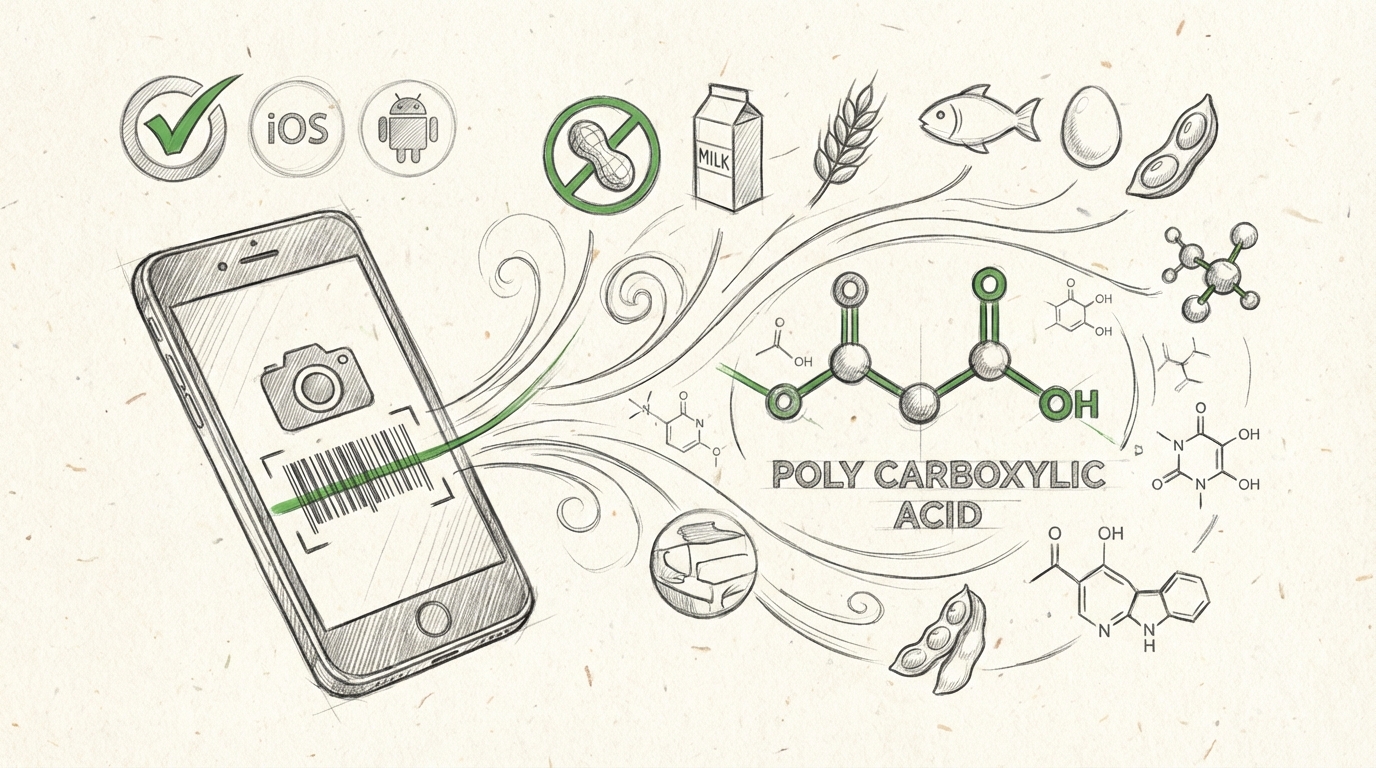
TL;DR: Poly carboxylic acid is a synthetic polymer containing multiple carboxyl groups, commonly used as a food additive, superplasticizer in concrete, and dispersing agent. While generally recognized as safe, individuals with sensitivities can use allergen-scanning apps to identify its presence in food products, cosmetics, and industrial materials by checking ingredient labels and barcodes.
Frequently Asked Questions

What is poly carboxylic acid and where is it commonly found?
Poly carboxylic acid is a synthetic polymer containing multiple carboxyl groups used as a food additive, preservative, and stabilizer. It's commonly found in processed foods, beverages, baked goods, and dairy products. This additive helps maintain texture, extend shelf life, and prevent separation in various food products. People with sensitivities should check product labels or use an allergy checker app to identify its presence.
Can poly carboxylic acid trigger allergic reactions or food sensitivities?
While poly carboxylic acid is generally recognized as safe, some individuals may experience sensitivities or adverse reactions including digestive discomfort, skin irritation, or headaches. It's not classified as a major allergen, but people with chemical sensitivities should monitor their reactions. Using an allergy checker app by scanning barcodes can help identify products containing this additive and track potential triggers.
How can I detect poly carboxylic acid in food products?
The most efficient way to detect poly carboxylic acid is by using an allergen detection app that scans product barcodes. These apps identify additives, preservatives, and allergens across 13 different categories. Alternatively, check ingredient labels for terms like 'polycarboxylic acid,' 'E number codes,' or related chemical names. Many allergen apps are available on both iOS and Android platforms for convenient scanning.
What is the difference between poly carboxylic acid and hydroxy stearic acid?
Poly carboxylic acid is a synthetic polymer with multiple carboxyl groups used as a stabilizer and preservative, while hydroxy stearic acid is a fatty acid derivative primarily used as an emulsifier and thickening agent. Both are food additives but serve different functions in food processing. Hydroxy stearic acid is derived from natural sources, whereas poly carboxylic acid is synthetically produced.
Is poly carboxylic acid safe for people following a gluten-free diet?
Yes, poly carboxylic acid itself is gluten-free as it's a synthetic chemical compound not derived from wheat, barley, or rye. However, products containing this additive may still have gluten from other ingredients. Those with celiac disease or gluten sensitivity should verify the entire ingredient list, not just additives. Consider using an allergy checker app to scan products for comprehensive allergen information.
How does an allergy checker app help identify poly carboxylic acid in products?
An allergy checker app works by scanning product barcodes and instantly analyzing ingredients against a database of allergens, additives, and preservatives. It identifies poly carboxylic acid along with 13 different allergen categories, traces, and chemical additives. These apps provide real-time alerts and detailed ingredient breakdowns, making it easier for consumers to make informed purchasing decisions and avoid unwanted substances.
What are the common uses of poly carboxylic acid in food manufacturing?
Poly carboxylic acid serves multiple functions in food manufacturing including acting as a stabilizer, emulsifier, preservative, and pH regulator. It prevents ingredient separation, extends shelf life, maintains product consistency, and improves texture in processed foods. Common applications include baked goods, dairy products, beverages, sauces, and dressings. Food manufacturers value it for its versatility and effectiveness in maintaining product quality.
Can I find poly carboxylic acid information using nutrition calculators like Chipotle's?
Standard nutrition calculators like Chipotle's nutrition calculator primarily focus on macronutrients, calories, and major allergens rather than specific food additives like poly carboxylic acid. For detailed additive information, specialized allergy checker apps that scan barcodes are more effective. These apps provide comprehensive ingredient analysis including preservatives, additives, and traces that typical restaurant nutrition calculators don't cover.
Understanding Polycarboxylic Acid: A Comprehensive Guide

Polycarboxylic acid is a versatile chemical compound that plays a crucial role in various industrial applications, from construction materials to food additives. For individuals managing food allergies and dietary restrictions, understanding the presence and function of polycarboxylic acid and related chemical compounds in everyday products is essential for making informed choices about what they consume and use.
This comprehensive guide explores the chemistry, applications, and safety considerations of polycarboxylic acid, along with related compounds that may affect those with sensitivities. Whether you're a parent managing a child's allergies or someone navigating celiac disease, understanding these chemical components can help you make safer product choices.
What Is Polycarboxylic Acid?

Polycarboxylic acids are organic compounds containing two or more carboxyl functional groups (COOH). These molecules are characterized by their ability to donate multiple protons, making them polyprotic acids with unique chemical properties.
The general structure consists of a carbon chain or ring system with multiple carboxylic acid groups attached. Common examples include citric acid, malic acid, and tartaric acid, which are naturally occurring polycarboxylic acids found in fruits and vegetables.
Chemical Properties and Structure
Polycarboxylic acids exhibit several distinctive characteristics:
- Multiple acidic hydrogen atoms that can be released in solution
- Strong chelating properties, allowing them to bind metal ions
- High water solubility due to polar carboxyl groups
- Variable acidity depending on the number and position of carboxyl groups
These properties make polycarboxylic acids valuable in numerous applications, from food preservation to industrial processes. Understanding their behavior is particularly important for those monitoring food additives and chemical sensitivities.
Industrial and Commercial Applications
Polycarboxylic acids serve diverse functions across multiple industries. Their versatility stems from their unique chemical structure and reactive properties.
Construction and Building Materials
In the construction industry, polycarboxylic acid-based polymers function as highly effective superplasticizers in concrete production. These compounds improve workability, reduce water content, and enhance the strength and durability of concrete structures.
The benefits include:
- Improved concrete flow without increasing water content
- Enhanced compressive strength development
- Reduced shrinkage and cracking
- Better durability in harsh environmental conditions
Food and Beverage Industry
Natural polycarboxylic acids like citric acid and malic acid are commonly used as food additives. They serve multiple purposes including flavor enhancement, pH adjustment, and preservation.
For individuals with food allergies, being aware of these additives is crucial when checking product labels. An allergy checker app can help identify potential allergens and additives in packaged foods quickly and accurately.
Related Chemical Compounds: What You Need to Know
Several related chemical compounds share similar properties or applications with polycarboxylic acids. Understanding these connections helps in managing dietary restrictions and chemical sensitivities.
Hydroxy Stearic Acid
Hydroxy stearic acid is a hydroxylated fatty acid used primarily in cosmetics, pharmaceuticals, and industrial applications. This compound contains both hydroxyl and carboxyl functional groups, giving it unique properties.
Common applications include:
- Cosmetic formulations as an emulsifier and thickening agent
- Pharmaceutical excipients in drug delivery systems
- Lubricant additives in industrial applications
- Coating materials for various surfaces
While hydroxy stearic acid is generally considered safe for external use, individuals with sensitive skin should perform patch tests before using products containing this ingredient.
Methane Sulfonic Acid
Methane sulfonic acid, though not a carboxylic acid, is an important organic acid used in various industrial processes. This strong acid finds applications in electroplating, pharmaceuticals, and as a catalyst in chemical synthesis.
Key characteristics include:
- Strong acidity comparable to sulfuric acid
- Excellent thermal stability
- Biodegradability and environmental compatibility
- Low corrosiveness compared to mineral acids
| Acid Type | Primary Use | Food Grade | Industrial Use |
|---|---|---|---|
| Polycarboxylic Acid | Food additives, construction | Yes | Yes |
| Hydroxy Stearic Acid | Cosmetics, pharmaceuticals | Limited | Yes |
| Methane Sulfonic Acid | Chemical synthesis | No | Yes |
Food Safety and Allergen Considerations
For individuals managing food allergies and dietary restrictions, understanding chemical additives in food products is paramount. While polycarboxylic acids themselves are not common allergens, they may be present in products containing other allergenic ingredients.
Reading Labels and Identifying Additives
When shopping for safe food options, careful label reading is essential. Natural polycarboxylic acids like citric acid (E330) and malic acid (E296) appear frequently on ingredient lists.
Modern technology makes this process easier. Using a food allergy app allows you to scan barcodes and instantly identify potential allergens, traces, and additives in products before purchasing.
Navigating Restaurant Dining
Dining out presents unique challenges for those with food allergies. When visiting restaurants that are gluten free or accommodate other dietary restrictions, it's important to communicate clearly about your needs.
For example, when using a chipotle nutrition calculator to plan your meal, you can identify safe options while avoiding allergens. Many chain restaurants now provide detailed chipotle nutrition info that includes allergen information and additive disclosures.
Gluten-Free and Allergen-Free Product Options
Finding safe food products requires vigilance and knowledge. The market for allergen-free products continues to expand, offering more choices for those with dietary restrictions.
Snack Options for Multiple Allergies
Individuals avoiding both gluten and dairy can explore numerous gluten free dairy free snacks that are widely available. These products undergo careful formulation to exclude common allergens while maintaining taste and nutritional value.
Popular allergen-free snack categories include:
- Rice-based crackers and chips
- Vegetable and fruit-based snacks
- Nut and seed mixes (for those without nut allergies)
- Popcorn and corn-based products
Specialty Products and Alternatives
The demand for allergen-free alternatives has led to innovative product development. For instance, those seeking gluten free cheese-its can find several brands offering similar cheese crackers made with alternative flours and ingredients.
Beverage options have also expanded significantly. Consumers looking for gluten free wheat free beer now have access to varieties made from sorghum, rice, millet, and other gluten-free grains that deliver flavor without triggering sensitivities.
| Grain | Protein Content | Common Uses | Allergen Considerations |
|---|---|---|---|
| Rice | 7-8% | Crackers, beer, bread | Generally safe |
| Sorghum | 10-11% | Beer, flour, cereal | Generally safe |
| Millet | 11-12% | Bread, porridge, beer | Generally safe |
| Quinoa | 14-15% | Flour, snacks, pasta | Generally safe |
Health Implications and Safety Standards
Regulatory agencies worldwide establish safety standards for chemical additives in food and consumer products. Understanding these regulations helps consumers make informed decisions.
Regulatory Oversight
Food-grade polycarboxylic acids undergo rigorous testing before approval for use in consumer products. Agencies like the FDA, EFSA, and other international bodies evaluate safety data including:
- Toxicological studies on acute and chronic exposure
- Acceptable daily intake (ADI) levels
- Potential interactions with other ingredients
- Manufacturing purity standards
Potential Sensitivities and Reactions
While polycarboxylic acids like citric acid are generally recognized as safe, some individuals may experience sensitivities. Symptoms can include digestive discomfort, skin reactions, or headaches in rare cases.
If you suspect sensitivity to food additives, maintaining a detailed food diary and working with healthcare professionals can help identify triggers. Modern tools like barcode scanning apps provide instant access to ingredient information, making it easier to avoid problematic additives.
Practical Tips for Managing Chemical Sensitivities
Living with food allergies or chemical sensitivities requires proactive management strategies. These practical approaches can help you navigate daily challenges more effectively.
Shopping Strategies
Develop a systematic approach to grocery shopping that minimizes exposure to problematic ingredients:
- Create a list of approved brands and products
- Use technology to scan products before purchasing
- Shop at stores with extensive allergen-free sections
- Read labels carefully, even for familiar products
- Contact manufacturers directly with specific questions
Meal Planning and Preparation
Preparing meals at home gives you complete control over ingredients. Focus on whole, unprocessed foods to minimize exposure to additives and preservatives.
When calculating nutritional information for meal planning, resources like a chipotle nutrition calculator can help you understand the complete nutritional profile of your meals, including potential additives and allergens.
Technology Tools for Allergen Management
Smartphone applications have revolutionized allergen management. A comprehensive allergy checker app enables you to:
- Scan product barcodes for instant allergen information
- Detect 13 different allergens including gluten, dairy, and nuts
- Identify traces, additives, and preservatives
- Build a database of safe products
- Share information with family members and caregivers
Environmental and Sustainability Considerations
The production and use of polycarboxylic acids and related compounds have environmental implications that conscious consumers should consider.
Biodegradability and Ecological Impact
Many polycarboxylic acids, particularly naturally derived ones like citric acid, are readily biodegradable and pose minimal environmental risk. Synthetic variants undergo environmental impact assessments to ensure they meet safety standards.
Factors affecting environmental impact include:
- Manufacturing process efficiency and waste generation
- Biodegradation rates in various environments
- Potential accumulation in water systems
- Impact on aquatic and terrestrial ecosystems
Sustainable Sourcing
The trend toward sustainable production methods has influenced how polycarboxylic acids are manufactured. Bio-based production using fermentation processes reduces reliance on petroleum-derived chemicals and lowers carbon footprints.
Future Developments and Research
Ongoing research continues to expand our understanding of polycarboxylic acids and develop new applications that benefit consumers while addressing safety concerns.
Emerging Applications
Scientists are exploring novel uses for polycarboxylic acids in areas such as:
- Biodegradable polymers for packaging materials
- Enhanced drug delivery systems in pharmaceuticals
- Improved water treatment technologies
- Advanced materials for energy storage
Safety Research and Testing
Continuous monitoring and testing ensure that polycarboxylic acids used in consumer products remain safe. Research focuses on long-term exposure effects, potential interactions, and identifying sensitive populations.
This ongoing vigilance benefits consumers, particularly those managing allergies and sensitivities who rely on accurate safety information to make purchasing decisions.
Take Control of Your Food Safety Today
Understanding polycarboxylic acid and related chemical compounds empowers you to make informed decisions about the products you consume and use. Whether you're managing food allergies, celiac disease, or simply seeking to avoid certain additives, knowledge is your most powerful tool.
Modern technology makes allergen management easier than ever before. Instead of struggling to decipher complex ingredient labels or wondering about hidden allergens, you can access instant, reliable information at your fingertips.
Take the guesswork out of food shopping and protect yourself and your loved ones from potential allergen exposure. Visit our website to discover how Nutrict's powerful barcode scanning technology can help you identify allergens, traces, additives, and preservatives in seconds. Available on both iOS and Android, Nutrict detects 13 different allergens and provides the comprehensive information you need to shop with confidence.
Don't let food allergies control your life. Start making safer, more informed choices today with the right tools and information at your disposal. Your health and peace of mind are worth it.
Article created using IntentRank