Nutrition Info Saltine Crackers: Complete Allergen Guide
TL;DR: Nutrition info for saltine crackers typically shows about 70 calories, 12g carbohydrates, 1.5g fat, and 135mg sodium per 5-cracker serving. They contain wheat and may have traces of milk or soy. To identify specific allergens, additives, and preservatives in different brands, scan product barcodes using allergen detection apps available on iOS and Android.
Frequently Asked Questions

What is the nutrition info for saltine crackers?
A standard serving of 5 saltine crackers (approximately 15g) contains about 60-70 calories, 1-2g of protein, 11-13g of carbohydrates, and 1-2g of fat. They typically contain 115-180mg of sodium per serving. Saltine crackers are low in fiber and sugar but can be high in sodium. Specific nutrition values vary by brand, so checking labels or using an allergen checker app is recommended for accurate information.
How can I check allergens in saltine crackers using an app?
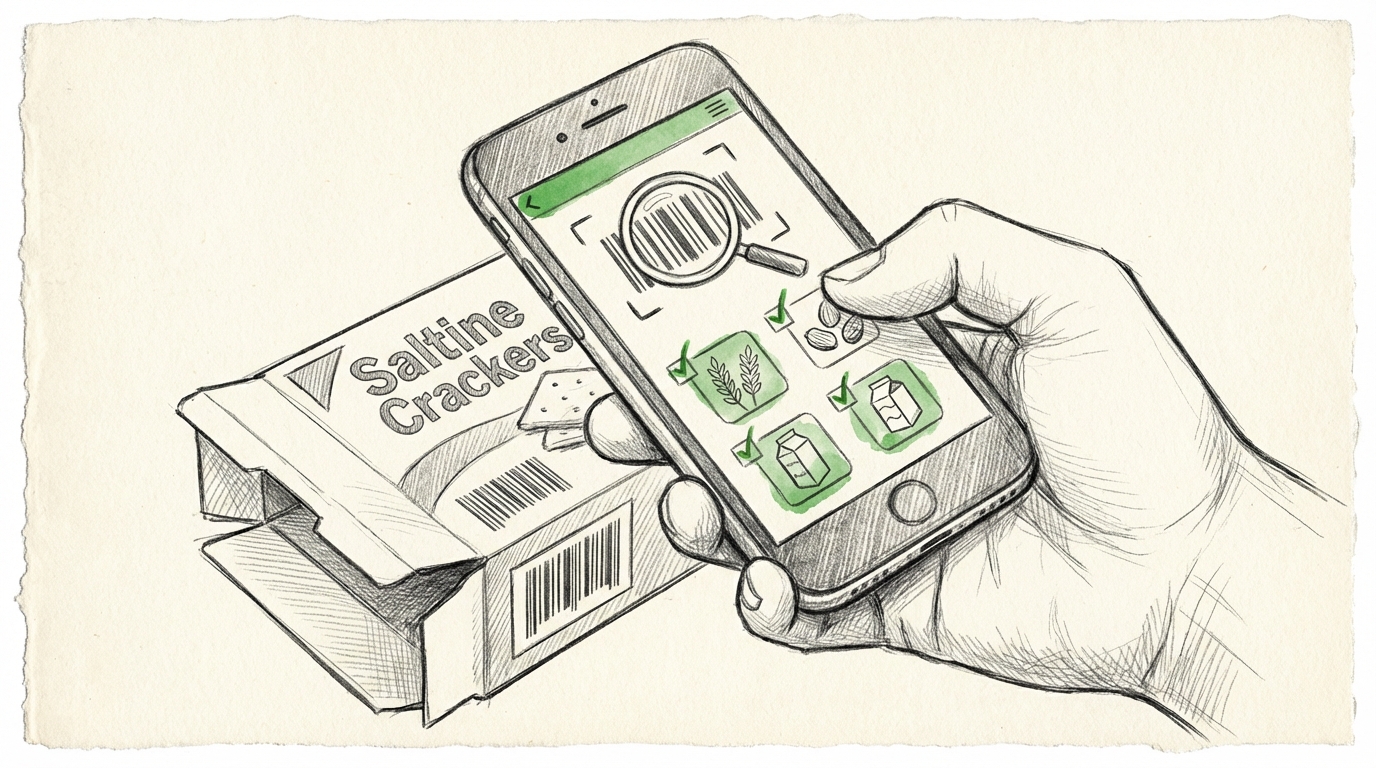
Allergen checker apps allow you to scan product barcodes to instantly identify potential allergens in saltine crackers. These apps detect common allergens like wheat, gluten, dairy, and soy, plus traces, additives, and preservatives. Simply download the app on iOS or Android, scan the barcode on your saltine cracker box, and receive detailed allergen information immediately, helping you make safer food choices.
Do saltine crackers contain gluten or wheat allergens?
Traditional saltine crackers contain wheat flour and gluten, making them unsuitable for people with celiac disease or gluten sensitivities. The main allergen in saltine crackers is wheat. However, some brands offer gluten-free alternatives made with rice flour or other gluten-free grains. Always verify ingredients using an allergy checker app or by reading product labels carefully before consuming.
What additives and preservatives are found in saltine crackers?
Common additives in saltine crackers include leavening agents like baking soda, malted barley flour, and sometimes soy lecithin as an emulsifier. Some brands may contain preservatives to extend shelf life. Certain formulations might include hydroxy stearic acid or similar compounds for texture. Using a barcode scanning app helps identify all 13 allergens, traces, additives, and preservatives specific to each brand.
Are there gluten-free alternatives to saltine crackers?
Yes, several brands offer gluten-free crackers as alternatives to traditional saltine crackers. These are made with rice flour, almond flour, or other gluten-free grains. Similar to gluten free cheese-its and gluten free wheat free beer options, these alternatives cater to those with celiac disease or gluten sensitivities. An allergen checker app can help you quickly identify truly gluten-free options by scanning product barcodes.
How does a nutrition calculator help with saltine cracker consumption?
A nutrition calculator helps track your daily intake of calories, sodium, and carbohydrates from saltine crackers. Similar to a chipotle nutrition calculator that helps customize meals, these tools let you input serving sizes and calculate nutritional values. This is especially useful for managing dietary restrictions, tracking macros, or monitoring sodium intake, as saltine crackers can be surprisingly high in salt content.
Can people with dairy allergies eat saltine crackers?
Most traditional saltine crackers are dairy-free and safe for people with milk allergies, as they typically contain only flour, water, oil, and salt. However, some brands may include dairy derivatives or be manufactured in facilities that process milk products, creating cross-contamination risks. Always verify by scanning the barcode with an allergy checker app or carefully reading ingredient labels for traces of dairy allergens.
What is the sodium content in saltine crackers and why does it matter?
Saltine crackers contain approximately 115-180mg of sodium per 5-cracker serving, which is 5-8% of the daily recommended intake. High sodium consumption can contribute to high blood pressure and cardiovascular issues. For people monitoring salt intake due to health conditions, checking nutrition info for saltine crackers is essential. An allergen checker app provides detailed sodium information alongside other nutritional data for better dietary management.
Understanding Saltine Crackers: A Complete Nutrition Guide

When reaching for a simple snack or settling an upset stomach, saltine crackers are a household staple. But what exactly is the nutrition info saltine crackers contain, and how do these crispy squares fit into your dietary needs? Whether you're managing food allergies, monitoring sodium intake, or simply curious about what you're eating, understanding the nutritional profile of saltine crackers is essential for making informed choices.
Saltine crackers, also known as soda crackers, have been a pantry staple for generations. These plain, lightly salted crackers are often recommended for digestive issues, used as a base for toppings, or enjoyed as a simple snack. However, their seemingly innocent appearance can be deceiving when it comes to nutritional content and potential allergens.
This comprehensive guide breaks down everything you need to know about saltine cracker nutrition, from calories and macronutrients to hidden allergens and additives. We'll also explore how modern technology, like an allergy checker app, can help you quickly identify ingredients that might affect your health.
Complete Nutrition Info Saltine Crackers Contain Per Serving

Standard Serving Size and Calorie Content
A typical serving of saltine crackers consists of 5 crackers (approximately 15 grams). This standard serving provides around 60-70 calories, making them a relatively low-calorie snack option when portion sizes are controlled.
The calorie content can vary slightly between brands, but most traditional saltine crackers fall within this range. Understanding serving sizes is crucial, as it's easy to consume multiple servings without realizing it, significantly increasing your calorie and sodium intake.
Macronutrient Breakdown
Saltine crackers are primarily composed of carbohydrates, with minimal protein and fat content. Here's what you'll typically find in a 5-cracker serving:
| Nutrient | Amount | % Daily Value |
|---|---|---|
| Total Carbohydrates | 11-12g | 4% |
| Protein | 1-2g | 2-4% |
| Total Fat | 1-2g | 1-3% |
| Dietary Fiber | 0-1g | 0-4% |
| Sugars | 0-1g | - |
The low protein and fiber content means saltine crackers provide quick energy but limited satiety. They're best paired with protein-rich foods like cheese, nut butter, or lean meats for a more balanced snack.
Sodium Content: A Critical Consideration
One of the most significant nutritional concerns with saltine crackers is their sodium content. A single serving typically contains 130-180mg of sodium, which represents approximately 6-8% of the recommended daily intake.
For individuals monitoring sodium intake due to high blood pressure, heart disease, or kidney issues, this can add up quickly. Consuming multiple servings throughout the day can easily contribute a substantial portion of your daily sodium allowance.
Common Allergens Found in Saltine Crackers

Wheat and Gluten Content
Traditional saltine crackers are made with wheat flour, making them unsuitable for individuals with celiac disease, non-celiac gluten sensitivity, or wheat allergies. The wheat content is typically the primary ingredient, providing the structure and texture characteristic of these crackers.
If you're looking for alternatives, there are gluten-free options available on the market. Similar to how consumers search for gluten free cheese-its or gluten free wheat free beer, many brands now offer gluten-free saltine-style crackers made with alternative flours like rice, corn, or almond flour.
Using a food allergy app can help you quickly scan product barcodes to identify gluten-containing ingredients and find suitable alternatives. These apps are particularly valuable when shopping for packaged foods that may contain hidden allergens.
Other Potential Allergens
Beyond wheat, saltine crackers may contain or be manufactured in facilities that process other common allergens:
- Soy: Often present in the form of soy lecithin, used as an emulsifier
- Dairy: Some varieties contain milk products or butter
- Eggs: Occasionally used in certain formulations
- Tree nuts and peanuts: Cross-contamination risk in shared facilities
Always check the ingredient label and allergen statement on the packaging. An allergy checker app can scan products and instantly alert you to the presence of your specific allergens, making grocery shopping safer and more efficient.
Hidden Additives and Preservatives in Saltine Crackers
Chemical Additives to Watch For
While saltine crackers appear simple, many commercial varieties contain additives and preservatives to extend shelf life and improve texture. Some ingredients you might encounter include:
- Hydroxy stearic acid: A fatty acid derivative sometimes used in food processing to modify texture properties
- Poly carboxylic acid: Occasionally used as a preservative or pH regulator in processed foods
- Methane sulfonic acid: Though less common in food products, some industrial food processing may involve chemical treatments
- Sodium metabisulfite: A preservative that can trigger reactions in sensitive individuals
- BHT (Butylated Hydroxytoluene): An antioxidant preservative used to prevent rancidity
Health-conscious consumers and those with chemical sensitivities should carefully review ingredient lists. Many brands now offer "clean label" versions with minimal additives, responding to consumer demand for simpler ingredient profiles.
The Importance of Reading Labels
Understanding food labels is crucial for making informed dietary choices. Beyond the basic nutrition facts panel, the ingredient list reveals what's actually in your food. Ingredients are listed in descending order by weight, so if you see enriched flour, partially hydrogenated oils, or multiple preservatives near the top, you're consuming more of these than you might realize.
Modern technology makes this process easier. Apps like Nutrict allow you to scan product barcodes and instantly see detailed information about allergens, additives, and preservatives. This is particularly helpful when comparing brands or discovering which products align with your dietary needs.
Comparing Saltine Crackers to Alternative Snacks
Nutritional Comparison Table
| Snack Type | Calories | Sodium (mg) | Fiber (g) | Protein (g) |
|---|---|---|---|---|
| Saltine Crackers | 60-70 | 130-180 | 0-1 | 1-2 |
| Whole Grain Crackers | 80-90 | 120-150 | 2-3 | 2-3 |
| Rice Cakes | 35-40 | 20-35 | 0-1 | 1 |
| Pretzels | 110-120 | 300-450 | 1 | 3 |
| Whole Wheat Bread (1 slice) | 80-90 | 130-170 | 2-3 | 4-5 |
As the comparison shows, saltine crackers fall in the middle range for calories but are relatively high in sodium compared to some alternatives. Whole grain options typically provide more fiber and protein, making them more nutritionally dense choices.
Healthier Alternatives for Various Dietary Needs
Depending on your specific dietary requirements, several alternatives might better suit your needs:
- For gluten-free needs: Rice crackers, corn cakes, or certified gluten-free crackers made from alternative flours
- For low-sodium diets: Unsalted crackers, fresh vegetables with hummus, or homemade crackers where you control the salt
- For higher protein: Seed crackers, whole grain crackers with nut butter, or cheese with vegetables
- For allergy management: Check out gluten free dairy free snacks for comprehensive options
Just as consumers search for specific dietary accommodations like chipotle nutrition calculator to make informed choices at restaurants, having tools to evaluate packaged snacks is equally important. The chipotle nutrition info approach of transparency should extend to all food choices.
How to Incorporate Saltine Crackers into a Healthy Diet
Portion Control Strategies
The key to enjoying saltine crackers as part of a balanced diet is mindful portion control. Here are practical strategies:
- Pre-portion servings: Divide crackers into single-serving bags or containers to avoid mindless eating
- Pair with nutrient-dense foods: Combine crackers with protein sources, healthy fats, or vegetables
- Use as a vehicle, not the main event: Top crackers with avocado, nut butter, or lean protein rather than eating them plain
- Stay hydrated: The high sodium content requires adequate water intake to maintain proper hydration
Best Uses for Saltine Crackers
Saltine crackers serve several practical purposes beyond simple snacking:
- Digestive relief: Plain saltines can help settle upset stomachs and reduce nausea
- Recipe ingredient: Crushed saltines work as breading for chicken or fish, or as a topping for casseroles
- Emergency energy: Quick carbohydrates for low blood sugar situations
- Travel snack: Portable, shelf-stable option for road trips or air travel
Understanding the nutritional content helps you use saltine crackers strategically rather than relying on them as a primary food source.
Reading Labels: What to Look For When Buying Saltine Crackers
Key Ingredients to Identify
When comparing brands and varieties of saltine crackers, pay attention to these ingredient categories:
| Category | What to Look For | Why It Matters |
|---|---|---|
| Flour Type | Enriched vs. whole grain vs. alternative flours | Affects fiber content and nutritional value |
| Fat Source | Partially hydrogenated oils vs. healthier alternatives | Trans fats increase heart disease risk |
| Sodium Level | Mg per serving | Important for blood pressure management |
| Preservatives | BHT, TBHQ, sodium metabisulfite | May cause reactions in sensitive individuals |
| Allergen Statements | "Contains" and "may contain" warnings | Critical for allergy safety |
Certified Labels and Claims
Look for third-party certifications that verify specific claims:
- Gluten-Free Certification: Ensures products meet strict gluten-free standards (less than 20 ppm)
- Non-GMO Project Verified: Confirms ingredients are not genetically modified
- Organic Certification: Indicates organic farming practices and no synthetic pesticides
- Kosher or Halal Symbols: Verifies compliance with religious dietary laws
These certifications provide additional assurance beyond basic ingredient lists, especially important for those with severe allergies or specific dietary requirements.
Technology Tools for Tracking Saltine Cracker Nutrition
Using Nutrition Tracking Apps
Modern technology has revolutionized how we monitor our food intake and manage dietary restrictions. Just as a chipotle nutrition calculator helps diners make informed restaurant choices, specialized apps can help you track packaged food consumption.
Nutrition tracking apps offer several benefits:
- Instant access to comprehensive nutritional information
- Ability to log and monitor daily intake patterns
- Personalized recommendations based on dietary goals
- Barcode scanning for quick data entry
For individuals managing food allergies, a dedicated allergy checker app provides an extra layer of protection by scanning products and identifying specific allergens before purchase or consumption.
The Advantage of Allergen Detection Technology
Advanced apps like Nutrict go beyond basic nutrition tracking by scanning barcodes to detect 13 different allergens, traces, additives, and preservatives. This technology is particularly valuable when:
- Shopping in unfamiliar stores or traveling
- Trying new brands or products
- Managing multiple food allergies simultaneously
- Teaching children to identify safe foods independently
- Avoiding specific additives or preservatives
The app provides instant alerts about ingredients that match your allergy profile, making grocery shopping faster, safer, and less stressful. This is especially helpful for parents managing children's dietary restrictions who need quick, reliable information while shopping with active kids.
Special Considerations for Different Health Conditions
Celiac Disease and Gluten Sensitivity
For individuals with celiac disease or non-celiac gluten sensitivity, traditional saltine crackers are off-limits due to their wheat flour content. Cross-contamination during manufacturing is also a serious concern, as even trace amounts of gluten can trigger symptoms.
When seeking alternatives, look for products specifically labeled "gluten-free" rather than simply "wheat-free," as other gluten-containing grains like barley or rye might be present. Similar to finding gluten free wheat free beer, identifying truly safe crackers requires careful label reading and verification.
Resources like Is Ezekiel Bread Gluten Free? demonstrate the importance of understanding which seemingly simple foods contain gluten and which alternatives are truly safe.
Diabetes and Blood Sugar Management
Saltine crackers have a relatively high glycemic index, meaning they can cause rapid spikes in blood sugar levels. For individuals with diabetes or prediabetes, this presents several considerations:
- Pair crackers with protein or healthy fats to slow glucose absorption
- Monitor portion sizes carefully
- Consider whole grain alternatives with more fiber
- Test blood sugar response to determine individual tolerance
The quick-digesting carbohydrates in saltine crackers can be useful for treating hypoglycemia, but they're not ideal for regular snacking when blood sugar control is a concern.
Heart Health and Cardiovascular Concerns
The sodium content in saltine crackers is the primary concern for heart health. High sodium intake is associated with increased blood pressure, which raises the risk of heart disease and stroke.
Additionally, some brands may contain partially hydrogenated oils, which are sources of trans fats. Even small amounts of trans fats can negatively impact cholesterol levels and cardiovascular health. Always check ingredient lists for "partially hydrogenated" oils and choose brands that use healthier fat sources.
Making Informed Snack Choices with Confidence
Building a Comprehensive Food Safety Strategy
Understanding the nutrition info saltine crackers provide is just one piece of managing your overall diet effectively. A comprehensive approach includes:
- Education: Learn to read and interpret nutrition labels accurately
- Technology: Use apps to quickly verify allergen and additive content
- Planning: Prepare snacks in advance to avoid relying on processed options
- Variety: Rotate different snack options to ensure nutritional diversity
- Awareness: Stay informed about ingredient changes in familiar products
Exploring resources like Nutrict's blog can provide ongoing education about food allergies, nutrition information, and safe product options across various food categories.
Empowering Your Food Choices
Whether you're managing food allergies, monitoring sodium intake, or simply trying to make healthier choices, having the right information and tools makes all the difference. The combination of label literacy and technology creates a powerful system for food safety and nutrition management.
From understanding what hydroxy stearic acid or methane sulfonic acid might mean on an ingredient list to knowing how to find truly allergen-free alternatives, informed consumers can navigate the complex food landscape with confidence.
Just as you might use a chipotle nutrition calculator to make informed restaurant choices, applying the same level of scrutiny to packaged foods ensures consistency in your dietary management across all eating situations.
Take Control of Your Food Safety Today
Understanding the complete nutrition info saltine crackers contain—from macronutrients and sodium to hidden allergens and additives—empowers you to make choices aligned with your health goals and dietary needs. Whether you're managing celiac disease, food allergies, or simply seeking cleaner ingredient profiles, knowledge is your most powerful tool.
Don't leave your food safety to chance. Modern technology makes it easier than ever to identify exactly what's in your food before you buy or consume it. Download Nutrict today and start scanning products to detect allergens, traces, additives, and preservatives instantly. Available on both iOS and Android, this powerful tool puts comprehensive food information right at your fingertips, making every shopping trip safer and more confident.
Take the guesswork out of grocery shopping and gain peace of mind knowing exactly what you're eating. Visit Nutrict to learn more about how our allergen detection technology can transform your relationship with food and help you navigate dietary restrictions with ease.
Article created using IntentRank